Cómo la Inteligencia Artificial Transformará los Videojuegos en 2026
Descubre cómo la inteligencia artificial revolucionará los videojuegos en 2026, con avances que cambiarán la jugabilidad y la experiencia de usuario.

Publicado por
PopularKeys Editorial TeamGuías de compra, tutoriales de activación y cobertura de precios de claves digitales.
Contenido
- The Revolution of Artificial Intelligence in Video Games
- Advances in AI for Non-Player Characters (NPCs)
- Personalized Experiences Through Machine Learning
- AI and the Creation of More Complex Open Worlds
- AI in Game Strategies and Player Behavior
- Augmented and Virtual Reality Simulation
- The Impact of AI on Game Development
- Ethical Considerations and the Future of AI in Video Games
The Revolution of Artificial Intelligence in Video Games
With the exponential advancement of technology, artificial intelligence (AI) is becoming an essential component in video game development. By 2026, AI is expected to radically transform the industry, offering more immersive, personalized, and challenging gaming experiences. This article explores the key trends that will define the future of AI-driven video games.
Advances in AI for Non-Player Characters (NPCs)
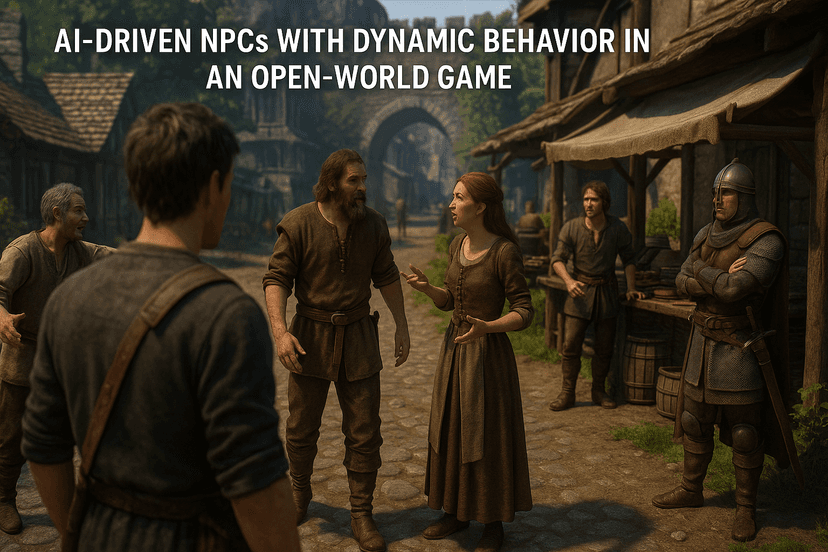
Non-player characters (NPCs) have been a fundamental part of video games since their inception. However, AI is taking their behavior to a new level of sophistication. By 2026, NPCs will be able to learn and adapt to player actions, providing a more dynamic and realistic experience.
Moreover, developers are using AI algorithms to create more natural and unpredictable behaviors in NPCs, resulting in less repetitive and more immersive gameplay. These advances will allow players to interact with characters that seem to have their own intentions and emotions.
- Adaptive behavior: NPCs will adjust their tactics based on player actions.
- Emotional interactions: Players will be able to form emotional bonds with NPCs.
- Variety and realism: Repetitiveness will be eliminated through advanced algorithms.
Personalized Experiences Through Machine Learning
Machine learning is a subcategory of AI that is transforming the way video games are designed. By 2026, games will be able to analyze player behavior in real-time to adjust the difficulty level and game content, offering a truly personalized experience.
This approach not only enhances user satisfaction but also prolongs the game's lifespan by keeping players engaged. Developers can use these systems to identify gameplay patterns and dynamically adjust game elements.
- Difficulty adjustment: The game adapts to the player's skill level.
- Dynamic content: New missions and challenges are generated on the fly.
- Increased retention: Personalized experiences keep player interest.
AI and the Creation of More Complex Open Worlds
Open worlds are a growing trend in video games, and AI is playing a crucial role in their development. By 2026, open worlds are expected to be even more complex and detailed thanks to AI, which will enable procedural generation of environments and the simulation of living ecosystems.
These worlds will not only be vast but will also react to player decisions. AI will facilitate the creation of environments that continuously evolve, ensuring that each gaming experience is unique.
- Procedural generation: Creation of expansive worlds with AI.
- Ecosystem simulation: Environments that react to player actions.
- Unique experiences: Each gaming session is different and personalized.
AI in Game Strategies and Player Behavior
Another area where AI is making its mark is in strategy and player behavior. Developers are using AI to analyze how players play and adjust game strategies accordingly. This not only improves gameplay but also helps identify and counter unwanted behaviors, such as cheating.
| Platform | Price | Delivery | DRM | Refund | Rating |
|---|---|---|---|---|---|
| PopularKeys | {{PK_PRODUCT_PRICE}} | Instant ✅ | Diverse | Buyer protection | ⭐⭐⭐⭐⭐ |
| Steam | $59.99 | Immediate | Steam DRM | Limited | ⭐⭐⭐⭐ |
| GOG | $59.99 | Immediate | No DRM | Limited | ⭐⭐⭐⭐ |
AI can foresee gameplay patterns and adjust the environment in real-time to provide optimal challenges. This ensures a balanced experience that keeps players engaged without frustrating them.
Augmented and Virtual Reality Simulation
Augmented reality (AR) and virtual reality (VR) are gaining ground in the world of video games. The integration of AI into these technologies will significantly enhance immersion and interactivity by 2026. AR and VR games will benefit from more realistic environments and characters that respond more naturally to player actions.
With the help of AI, these games will be able to offer highly personalized and adaptive experiences, making virtual worlds feel more real and tangible.
- Enhanced interactivity: Characters that respond naturally.
- Realistic environments: Virtual worlds that seem real.
- Personalized experiences: Games that adapt their content to user preferences.
The Impact of AI on Game Development
Artificial intelligence is not only transforming gameplay but also the game development process. Developers are using AI-powered tools to automate repetitive tasks, allowing them to focus on creative aspects and innovative design.
By 2026, AI is expected to significantly accelerate development time, reduce costs, and increase the quality of the final product. This translates into more advanced games that are accessible to a broader audience.
- Task automation: Reduction of development times.
- Higher quality: More polished and well-designed games.
- Accessibility: More innovative games within reach of more players.
Ethical Considerations and the Future of AI in Video Games
With all these advancements, ethical considerations about the use of AI in video games also arise. The collection of player data to personalize experiences raises questions about privacy and consent. Developers must ensure that AI practices are transparent and respectful of users.
Furthermore, AI must be designed to promote fair and ethical gameplay, avoiding exploitative or unfair practices. As we move towards 2026, the balance between innovation and ethics will be crucial for the future of AI in video games.
- Player privacy: Ensuring consent and transparency.
- Fair play: Avoiding exploitative practices.
- Ethical innovation: Balancing technological advancement and ethics.
Preguntas frecuentes
¿Cómo mejorará la IA la experiencia de juego en 2026?
La IA ofrecerá experiencias de juego más personalizadas, PNJ más realistas y mundos abiertos más complejos.
¿Qué es el aprendizaje automático en videojuegos?
Es un tipo de IA que ajusta dinámicamente el contenido y la dificultad del juego basándose en el comportamiento del jugador.
¿La IA afectará la privacidad de los jugadores?
Sí, es importante que las prácticas de IA sean transparentes y respeten la privacidad del usuario.